Good Enough Is Enough: How to Do Less Without Letting Things Slide
Lowering the bar on purpose is a skill. How to choose what can be good enough, everyday examples to start with, and what to keep doing well.
If you're used to doing everything well, "good enough" can feel like failing. But when your energy is running low, doing everything to your usual standard is exactly how you end up running on empty.
Doing less, on purpose, is a skill. Here's how to practice it without letting the important things slide.
Why "good enough" is hard
Most of us carry an invisible list of how things should be done: the table set properly, the birthday cake homemade, every email answered the same day. Those standards often came from somewhere — a parent, social media, the most organized person you know — and we've never stopped to ask whether they're worth the energy they cost.
When life is calm, maybe they are. When you're overwhelmed or burnt out, they become weight.
Start by asking two questions
For any task, ask:
- Who would notice if I did the simpler version? Often the answer is: nobody, or just me.
- What would it actually cost? Not "it would feel wrong" — what would really happen?
If the honest answers are "nobody" and "nothing much," that task is a candidate for good enough.
Everyday tasks to start with
Here are a few to try this week. Each has a "perfect" version and a "good-enough" version.
- Weeknight dinner. Perfect: cooked from scratch, three components. Good enough: everyone ate something. Eggs and toast count. So does a rotisserie chicken and a bagged salad.
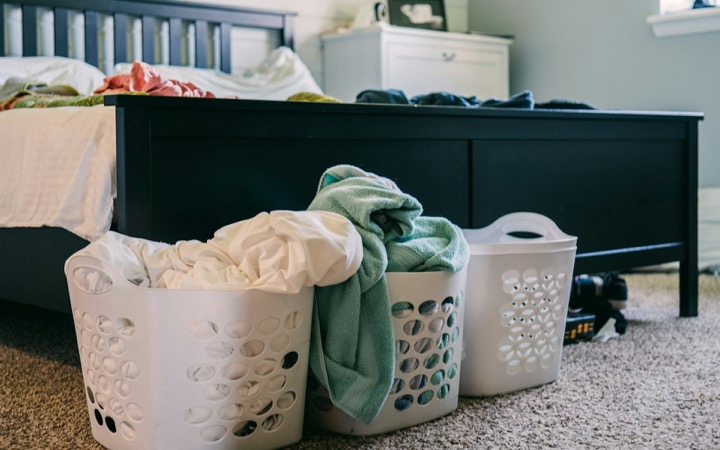
- Laundry. Perfect: washed, folded, put away. Good enough: clean. One basket per person; everyone finds their own.
- Tidying. Perfect: the whole house. Good enough: one room, or ten minutes with a timer.
- Birthdays. Perfect: homemade cake, themed party. Good enough: a store-bought cake and the people they love.
- School lunches. Perfect: balanced and cute. Good enough: food they'll eat, repeated on purpose.
- Messages. Perfect: a thoughtful reply today. Good enough: "Got it, thanks!" — or tomorrow.
- Holiday cards. Perfect: photos and handwritten notes. Good enough: a text. Or skip a year.
Pick three. Do them the good-enough way for seven days. Then look back and notice what actually fell apart. Usually: nothing.
What to keep at full standard
Good enough is not "anything goes." Keep these at your normal standard, always:
- Safety — car seats, food safety, anything that could hurt someone.
- Medications and health appointments.
- Money deadlines: rent, bills, taxes.
- Anything legal or official.
- The basic care of people and pets who depend on you.
Lowering the bar elsewhere is exactly what frees up the energy to keep these steady.
Good enough, done by someone else
One of the best uses of good enough is handing things over. If your partner folds towels "wrong" or your teenager makes lunches you wouldn't, that's fine. If you step in to redo it, the task comes straight back to you — and with it, all the remembering and checking. That's the mental load in action.
Done differently by someone else beats done perfectly by you at 11 p.m.
Notice the guilt — then keep going
The first week, you'll probably feel a twinge every time you choose the simpler version. That's normal. You're breaking a habit, not a rule. The guilt fades with repetition, just like it does when you practice saying no.
Where good enough fits
Doing less is one of the four ways to take weight off — drop, delay, delegate, or do it badly — in our guide on how to stop feeling overwhelmed. And if you're past overwhelmed and into exhaustion that rest doesn't fix, it's step 3 of the burnout recovery plan.
Want the full list? Permission to Do Less puts twenty everyday tasks side by side — the perfect version and the good-enough one — so you can choose without overthinking it.
Questions people ask
Isn't "good enough" just lowering my standards?
For a while, on purpose, in some places — yes. That's the point. You're choosing where your limited energy goes, so the things that matter most still get your best.
How do I stop being a perfectionist about housework?
Pick one task, decide what "done" looks like at the good-enough level, and stick to it for a week. Then notice what actually changed. Usually it's less than you feared.
What should I never do "good enough"?
Safety, medications, money deadlines, anything legal or medical, and the basic care of people and pets who depend on you. Keep those at full standard.